


Documentarian Ken Burns latest takes an in-depth look at the uprising that changed the world in The American Revolution
Ken Burns has been producing blue-chip documentaries for PBS for decades, all boasting a distinctly American perspective. While past topics have ranged from jazz music to baseball to prohibition to the Civil War, his latest stretches back to the very origin story of the country. Over the course of 12 hours, spread across six consecutive nights (beginning Sunday and concluding Friday), The American Revolution (which Burns co-directed with David Schmidt and Sarah Botstein) tells the story of how a ragtag army, led by a general who would become the new nation’s first president, overthrew one of Europe’s most powerful monarchies and introduced modern-day democracy.
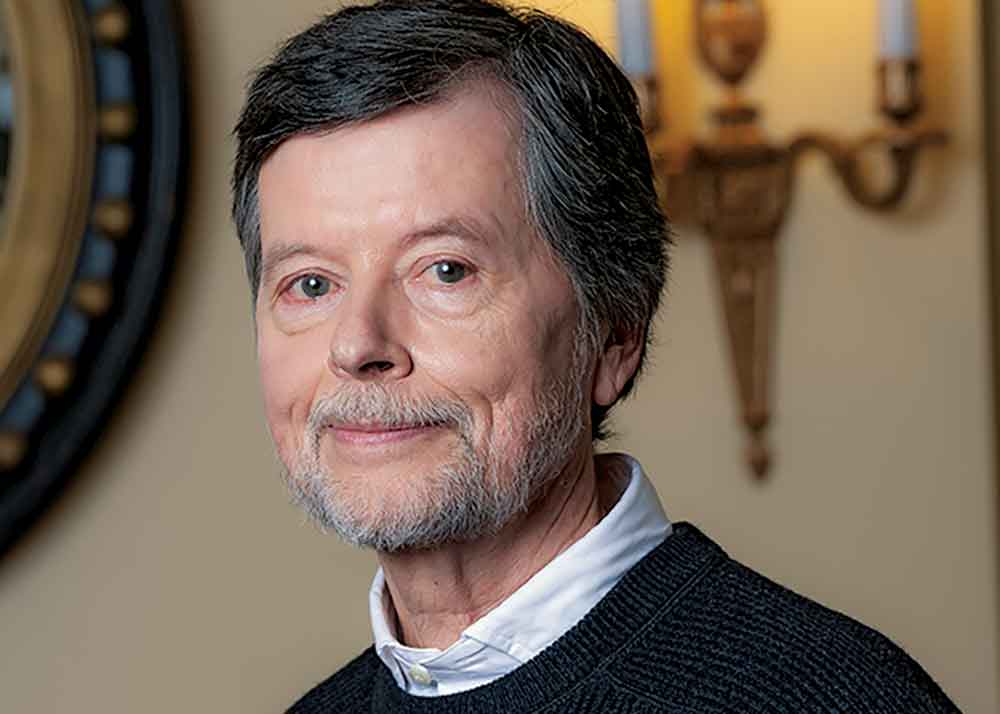
“I think this is one of the most important events in world history,” says Burns. “It’s certainly the most consequential revolution, as we say, but I think it’s the most important event since the birth of Christ.”
That may seem an audacious statement, but the film makes a solid case for that argument, recounting how 13 British colonies on the Atlantic Coast rose in rebellion, won their independence and established a new form of government that radically reshaped the continent and inspired centuries of democratic movements around the globe.

According to the PBS synopsis, the film provides ”an expansive look at the virtues and contradictions of the war and the birth of the United States of America,” telling the individual stories of the rank-and-file Continental soldiers and American militiamen (some of them teenagers), Patriot political and military leaders, British Army officers, American loyalists, Native soldiers and civilians, enslaved and free African Americans, German soldiers in the British service, French and Spanish allies, and various civilians.
Assisting Burns in telling these stories are an impressive roster of actors, including Peter Coyote (who’s narrated dozens of Burns’ previous docs), Adam Arkin, Kenneth Branagh, Josh Brolin, Hugh Dancy, Claire Danes, Tom Hanks, Damian Lewis, Tobias Menzies, Matthew Rhys and Liev Schreiber.
It’s no secret that America is prone to mythologizing its history and heroes, and one of Burns’ goals is to dig deeper into stories that viewers think they know, but actually don’t. “Because every day of our production, Sarah and Dave and I were going, ‘Wow, I didn’t know that,’” he said of the historical facts they unearthed while making the series. “There’s a lot of superficiality to the way we teach any kind of history, and it sometimes migrates, as certainly the revolution has done, into mythology, so the chopping down of the cherry tree and never telling a lie, and throwing a dollar coin, you know, don’t fire until you see the whites of their eyes, all the kind of mythology,” he adds.
In that vein, Burns was also insistent that The American Revolution not shy away from the inherent violence that underscored everything during that legendary war. “This is a revolution, a bloody, bloody revolution, superimposed by a bloody civil war, superimposed by a bloody world war. The cast of characters is extraordinary. There’s an unbelievable variety of a cast of characters,” he said.
As Burns points out, the American Revolution did not take place in a vacuum, and while it’s typically depicted as disgruntled settlers unshackling themselves from the taxation without representation of the British monarchy, the conflict wound up ensnaring much of Europe. “It’s a world war fought between dozens of nations in North America and in Europe. It’s so many things,” adds Schmidt. “It’s a world war. It’s a civil war. It was making itself up the way life does as it was going, but it’s an enormous underdog story and really a surprising story,” notes Bottstein.
“It’s our creation story,” Burns adds. “And we should be enormously proud, but not burdened by all the mythology that has attended to it up to this point.”
The series premiere of The American Revolution airs Sunday, November 16, on KCTS and WTVS