


The outlandish antics of the socialite Mitford sisters roiled British high society in the 1930s, and their story comes to the screen in new miniseries Outrageous
In real life, the Mitford sisters were something of a marvel. The six daughters of English aristocrat David Freeman-Mitford, 2nd Baron Redesdale (James Purefoy), hailed from the same privileged background, but their extreme ideological differences, fuelled by the First World War and a looming Second World War, would eventually tear them apart — as well as make them notorious.
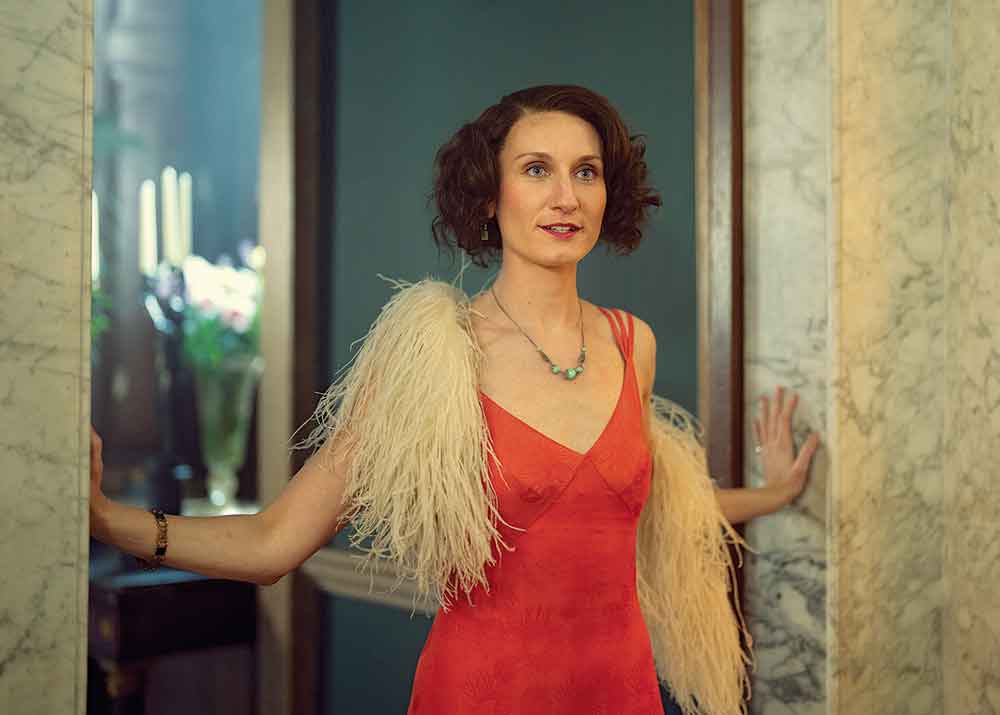
Outrageous, the dramatized version of the Mitford sisters’ lives, is told through the eyes of eldest daughter Nancy (Bridgerton alum Bessie Carter). A novelist since the early 1930s — who would eventually be appointed Commander of the Order of the British Empire (CBE) for her contributions to English literature — Nancy introduces viewers to seemingly level-headed Pamela (Isobel Jesper Jones), manipulative Diana (Joanna Vanderham), Hitler-obsessed Unity (Shannon Watson), Communist Decca (Zoe Brough) and Deborah (Orla Hill), who eventually would come to run one of Britain’s most successful stately homes. As young women , these six are as close as can be. “The arc of series one is the breakdown of specific sisterly relationships,” explains Vanderham. “Nancy and Diana go from sharing a bed in episode one to not being able to be in the same room together, and that is because of their politics.”

Examining a family fractured by partisan worldviews seems more topical than ever in 2025. For the cast, the similarities between 1930s England and the world we live in today sometimes felt frightening. “They always say history rhymes,” says Brough. “I think in this show it really rings true. Looking at when this was set, nearly 100 years ago, there are so many issues that are prevalent in today’s society. It was astounding for us, while we were on set filming the show and looking at the outside world, that not a lot has changed, in many aspects.”
How the girls land in opposing sociopolitical corners is largely dependent on their personalities, human relations and strong convictions. “Unity had zero self-doubt,” says Watson. “She managed to persuade her parents to allow her to go to Germany. They obviously saw what she started getting into, when she started talking about fascism, and that was quite a big thing for them, to allow her to go. But it was the only thing that excited her and pulled her out of her teenage saltiness.” For Unity, the pursuit does not end well. “She just was not a well-informed person,” says Watson. “She was very naïve to everything she was about to pursue.”
Though less rabid in her beliefs, sister Diana uses her powers of persuasion to get exactly what she wants. “It’s almost effortless for her — she didn’t manipulate, she just sort of suggested as if it was the only option. I really wanted to bring that into my performance,” says Vanderham. “Her Achilles heel was her love for [fascist leader] Oswald Mosley [played here by Joshua Sasse]. She sacrificed a hell of a lot for him, and she put her life in danger because of her love for him. She gave up relationships with her sisters and ultimately took on some very controversial political views because of her love for him.”
Diana and Unity were not the only Mitfords sacrificing sisterly bonds for their principles. “Decca looked at the wider picture of life and found that things were going on that she wanted to do something about,” says Brough. “But I found it quite sad that she stopped speaking to her sisters because of their political extremes. I think it resulted in quite a sad life in many aspects. I think, for all the sisters, it was a massive void in their life; being so close with each other for such a long time and suddenly breaking that off and never seeing each other again.” Adds Vanderham: “I think that’s why it feels like such an important show because it’s trying to say, ‘Keep having those conversations with your loved ones. Don’t let them go.’”
The way Outrageous tackles differences within a family unit feels remarkably contemporary despite the near-hundred years that have passed since the Mitfords formed the political alliances that would make family dinners awkward. “The way that it’s been shot — the cinematography, the music design, the editing — has been inspired by the pace with which these women thought,” says Vanderham. “Their intelligence and their wit and their humour informs the whole tone of the show.” The actress believes the tone and pace they have adapted for the series might even draw in those that normally eschew period dramas. “People love period dramas because it does allow you to take a look at humanity and how we live and the choices that we make, but from a feeling of being removed from it. But I do think that this show, you’re not going to feel removed. You’re going to feel in it and like you’re with them.”
Outrageous, streaming on BritBox