


Former commando Aldo Kane, camera trap expert Declan Burley and wildlife cinematographer Vianet Djenguet pull back the curtain on their extraordinary wildlife docuseries The Wild Ones
A blue-chip documentary from the likes of David Attenborough can take up to four years to produce, which means that by the time an animal makes it to the screen, it may no longer exist in the wild. In The Wild Ones, a new docuseries from Apple TV+, camera trap expert Declan Burley, wildlife cinematographer Vianet Djenguet and ex-Royal Marines soldier Aldo Kane demonstrate exactly how hard it is to capture these near-extinct creatures on camera — on a shorter time frame, no less. The result is a show that is more Amazing Race than Blue Planet. “This was absolutely a unique series,” says Djenguet. “It’s like watching that 10-minute sequence at the end of a blue chip.” Which is not to say that this six-hour “behind-the-scenes” doc has fewer natural wonders to marvel over than your usual wildlife special. “Ultimately we captured world-first footage in six regions around the world — images that have never been seen before or may never be seen again,” says Kane. TV Week caught up with the trio about what they hope to accomplish with this endeavour.
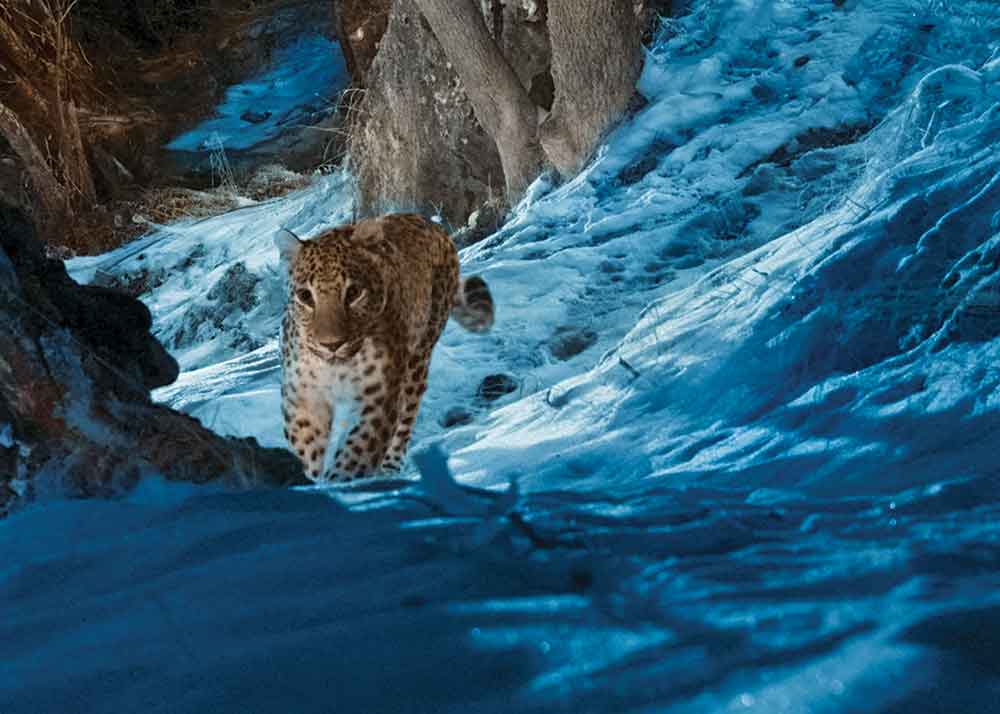
One might think it’s easier to capture guys trying to capture rare animals on film than it is to actually catch a frame of the animal itself. You all somehow manage to do both. How did you accomplish that, and in a shorter timeframe?
Kane: Working in collaboration with people on the ground really helped us. Without the people on the ground, we would not have been able to make this.
Djenguet: You see how we’re engaging with scientists, rangers and conservationists to support the effort that they’ve already been doing.
Kane: So, the shortened timeframe doesn’t detract at all from the message that we are trying to get across. But it means that the three of us and the small crew were pretty wrung out, bouncing between Mongolia, Armenia and the [African and Asian] jungle. I had a kid in between all of this, and then you’re packing for the jungle, one trip for tigers and you come back and then it’s bears in Mongolia with a different kit, different mindset and different issues to worry about. It was a pretty full-on two years. Hopefully that comes through.

Was there a risk of not getting the featured animal into an episode?
Burley: Yeah. I think there was always that risk. You’re always nervous, you know? You’re setting up these cameras, hoping you’ll get the shot. But we had great people on the ground. They showed us good locations to set up. It is a bit of a numbers game, as well, but I always have faith that you’ll get the shot and that’s why it’s such a relief when you do. When you do get that payoff, it is a crazy feeling.
Djenguet: Essentially, what the producers and the directors were saying to us was, it’s about the endeavour of getting these images. Showing the endeavour was key because animals are animals. Wildlife, you can’t control. You can’t book a rhino to be there when you’re there.
I feel like we all agree that policy change is what will change the trajectory for these endangered species. How can your show be in service of that?
Kane: I think it’s very difficult to protect and conserve something that you cannot see or have no connection to. That’s where I think media that has a global reach is key. There’s no point in making a film about saving tigers and then only showing it in the U.K. It requires a platform the size of this to get that message out to the widest demographic, to then allow them to push policy change. Ultimately, it’s a ticking clock. Some of the species that we filmed are on the very, very brink of extinction and something as big as this really does have the power to push and change policy, but also to get people interested. What we want to do is inspire younger people to get out there and start protecting and conserving what we have left on Earth.
Djenguet: One of the most powerful examples of this is in Mongolia, where we would help the scientists gather footage so they can present it to the government and take it further, to UNESCO, so that the entire landscape can be protected for the Gobi bears. You have less than 40 bears left in a massive landscape, twice the size of France. So, taking that evidence to UNESCO will change things for their survival.
How do your skills complement each other?
Kane: This is raw frontline conservation, filmed in the moment. That comes with all the highs and lows that you see in the series. The environments that we worked in had a lot of hazards that needed to be taken into consideration — and not just the animals. You need to build a team that is incredibly effective and has a small footprint. Everyone needs to be able to do two or three different jobs and they need to be the best in the world at what they do. That’s from the scientists and conservationists on the ground to the people filming us trying to find and film the animals. It really is about putting together an elite team of wildlife filmmakers that can operate in extreme environments.
Declan, what is wildlife photographers’ beef with camera traps? You seem to get seven months of footage from them.
Burley: Most of ’em don’t work, to be honest with you. The jungle is brutal on camera traps. So, we lost a lot of traps out there. It is a lot of legwork. There’s a lot of planning. Some people just don’t like using them. But I always feel that it’s worth it because of the shots you can get with them. So yeah, a lot of people have beef with them, but I’m not one of them.
Kane: Dec, what was your hit rate, you reckon, over the series? You put out 100 cameras. How many delivered?
Burley: The little ones, they’re rock solid. They don’t miss a trick. But the ones where you’re trying to create a scene and trying to dive into the blue-chip world, they struggled in some of the environments, especially the jungle. But in Mongolia they were great. They worked and that’s why, when we got that shot of a bear at the scratch rock and then we saw the two bears together, it was just such a powerful moment. I knew how much work went into that setup. We just couldn’t leave that location until the job was done and it’s a massive team effort — you’re just trying to be the ringleader and we’re all tired — so when we actually got that shot, well, if you see my reaction, you know how much it means.
The Wild Ones, streaming on Apple TV+