


When the mayor of a small island community tries to bolster tourism, he discovers that chatter about a centuries-old supernatural terror are more than rumours
Widow’s Bay, the small New England town plagued by a supernatural curse, has lived inside its creator Katie Dippold for a long time. The origins of the comedic horror series date back to 2009, when Dippold was hired as a writer on Parks and Recreation, based on a script that she wrote about the haunted island. “[Parks and Rec creator] Mike Schur hired me off of it,” says Dippold. “It was pretty different then — more joke-focused — and now it’s more grounded and more focused on tension and the characters. But it’s something I just kept thinking about over the years.”
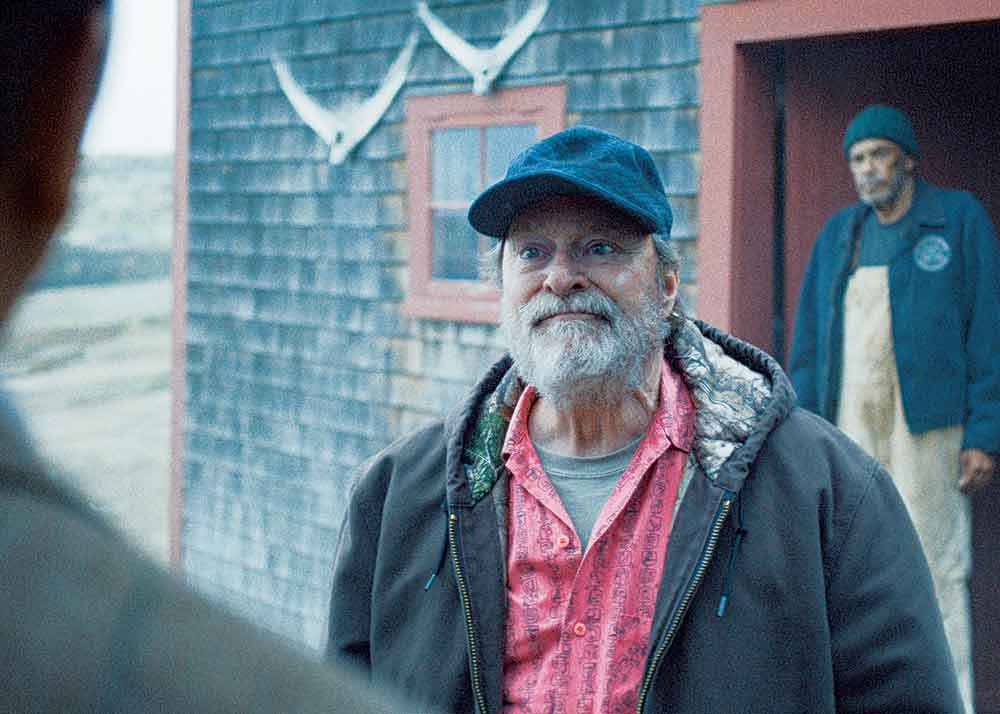
As a fan of Jaws and the works of Stephen King, Dippold had long wanted to create a similar small-town environment that she could will into existence. “About five years ago or so, I went to Marblehead, Massachusetts, and there was this great diner called the Driftwood. It was really cozy and lived in, and it felt like a Stephen King-like atmosphere. I never wanted to leave,” she says. “I wanted that world to exist. I wanted to believe that there could be an island town off of New England that you could go to where weird things happen that make you raise a lot of questions. What’s the story of the inn? Why has that house been boarded up for 40 years?”
In Widow’s Bay we meet Tom Loftis, the town mayor played by Matthew Rhys, who thinks all the superstition is nonsense. “He’s really defiant in trying to bring tourism to this island town, but he’s also repressing a lot and there’s things he has to come to terms with,” says Dippold. “He’s the mayor, but the locals don’t trust him. They don’t believe he’s up to the job. They don’t think he’s strong enough. I think he wants their respect, even though he would never admit it. And then the town, it feels like it’s dying and he wants to bring life to it and the locals are telling him it’s haunted. But the stuff they’re saying just sounds too ludicrous to believe, so it’s easy for him to dismiss it. He’s hellbent on making this happen and he’s incorrect to do that.”

Rhys had not been top of mind for the series creator, when casting the role of Tom. “I honestly did not see it at first. I am a huge fan, and I believe he’s one of the best actors of all time. I think this man can do anything. But I didn’t think of him as a funny person. And then we Zoomed with him and he was just so funny and lovely, and he completely got the show,” says Dippold. “Now I can’t imagine anyone else doing it.” Dippold wasn’t the only one that found the match a surprise. “I’d certainly never read anything like it. I too am a child of the ’80s and I’d grown up with things like The Wicker Man and Jaws,” says Rhys, best known for his Emmy-winning role on The Americans and the recent crime thriller The Beast in Me. “This was kind of everything I’d always thought I would never get to do, and it became a true dream job.”
Dippold always knew it would require a specific kind of talent to translate the tone of her show to screen. “Because I’m a massive horror fan, I feel like if that part was being taken seriously, I would not watch the show,” she says. “I want to believe these people are real and I never want it to feel like a parody. And I never want it to feel corny.” Saying that, the show has a lot of humor, sometimes when you least expect it. To walk that tonal tightrope, Dippold hired Hiro Murai, the director of Atlanta and The Bear. “He’s so good with little nuances and small little moments,” she says. “And I never have to worry about something feeling corny with him. He brings laser-sharp focus on specifics and making it feel real but still finding the surprise in moments. And we talked at such great lengths about what worked. It was a constant process of molding the show from the beginning to end.”
Murai saw the project as a unique challenge. “I’ve never read something with so much hard comedy in it and truly terrifying horror, while trying to be honest about the emotional lives of these characters. It felt like we’re just hanging on to two sled dogs at the same time,” he says. His other challenge was to make Widow’s Bay feel both nostalgic and current at the same time. “It feels like your memory of seeing a scary ’80s movie. The challenge was, how do you take that feeling and then literalize it?” he muses. “And the island itself, it’s removed from civilization so everything’s a little bit anachronistic and their technology is old and there’s something about it that feels removed from our time. There was something really exciting about creating this place, trying to make it as real, tangible and lived in as possible.”
For the scribe who honed her skills on the 23-minute sitcom before moving into feature film, being able to create something entirely without guardrails has been a dream. “This was the most creative experience of my life,” says Dippold. “Even in the pitch to Apple, you’re supposed to have an ’Oh, this show is just like this other successful show.’ And I was really banging my head against the wall trying to think of anything, but nothing felt right because I knew it wouldn’t be like any of those shows. So, instead, I just doubled down on the opposite. It was like a salesman: ‘This is like nothing you’ve ever seen before.’” Similarly, the writing process felt like nothing Dippold had experienced before. “In the room, there were no real rules. It was really coming from a place of, ‘What do we want to see next? How do we feel about this moment and what would that character do?” It made it so rewarding,” she says. “And I always hope for this feeling where an episode starts, where you don’t know if it’s going to be scarier or if it’s going to be funnier, because we really were just following our instincts. I think that makes it an interesting watch.”
Widow’s Bay, streaming from Wednesday, May 20, on Apple TV