


Walking with Dinosaurs blends state-of-the-art CGI with the latest scientific findings to update a TV classic
Back in 1999, the BBC nature documentary series Walking with Dinosaurs made quite the splash. Six years after Steven Spielberg introduced the world to Jurassic Park, the BBC Science Unit utilized this new technology to produce a series in which CGI and animatronic dinos inhabited live-action footage. The most expensive documentary series per minute to ever be produced also became the most-watched science program on British television in the 20th century.
A quarter-century has passed and not only has CGI technology improved, but what we now know about dinosaurs has also warranted a new stroll with these prehistoric beasts. “It felt like a fantastic time to revisit the series because the science and the amazing work that experts are doing has progressed to such a degree that there were new stories to bring to screen,” says executive producer and showrunner Kirsty Cohen. In fact, the stories are so good that, “sometimes audiences question us as filmmakers, like, ‘You’re making that all up.’ And we could literally go, ‘No, see the evidence for yourself, coming out of the ground.’”

But perhaps even more importantly, the producers felt dinosaurs had a reputation to restore. “I come from a natural history background and I felt like people were reducing dinosaurs to mythical beasts alongside dragons,” says Cohen. “These were not just crazed monsters chasing Jeeps. They were real animals with complex lives that faced challenges. I wanted people to understand that and sympathize with them. We felt the best way to do that was to tell a singular story of one individual. It was that amazing drama rooted in real science that we set out to achieve.”
In six brand-new episodes, viewers are introduced to a variety of species, through one fleshed-out dino. The adventures of Clover the baby Triceratops, discovered at a dig site in Montana — not far from the remains of a Tyrannosaurus rex — opens the show. Other episodes take the viewers to the Moroccan Sahara for one of the largest predatory dinosaurs: the Spinosaurus. In Alberta, paleontologist Mark Powers has unearthed a teenage Albertosaurus, a smaller version of a T-rex capable of reaching speeds of 30 miles per hour. Last but not least, the Lusotitan, known as El Grande, roams the Iberian Meseta in episode six, hoping of winning over a mate.
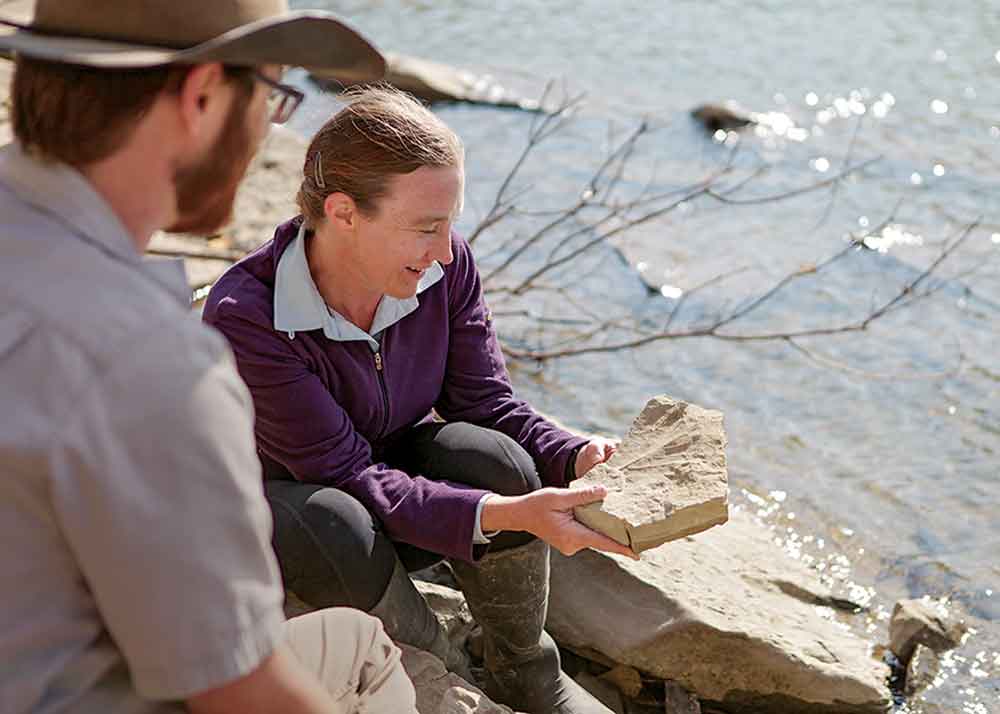
The series also mixes dinosaur escapades with real-life dig sites. One of the paleontologists lending her Indiana Jones vibe to the series is Emily Bamforth , whose findings in northern Alberta stand out, in part, for just how prolific they are. “Our episode features a site we call the Pipestone Creek Bonebed, one of the largest and densest dinosaur bonebeds in North America,” says Bamforth. “It’s all one type of dinosaur called a Pachyrhinosaurus; an older, smaller cousin of the Triceratops, but with this big bony bump on their nose. We think the Pipestone Creek Bonebed represents a herd of these animals that died in a catastrophic event that we understand to be a flash flood.”
The fifth episode focuses on Albie, a baby Pachyrhinosaurus that is on a seasonal migration with his mother and the other members of his herd. “What [astonished] me when seeing the episode itself was the size of this herd. We estimated the size to be about 10,000, but it wasn’t really until I saw that actually depicted in the episode that I was like, ‘Wow, that really was a lot of animals,’” says Bamforth.
In the episode, little baby Albie interacts with other species in the ecosystem and his own herd, unaware that the end may be near. “What I really liked about the episode was that as scientists, we sometimes think very unemotionally about events,” says Bamforth. “We’re like, ‘This is a bonebed of tens of thousands of animals, fantastic.’ We have adults, babies, juveniles, the entire herd that all died at once. If you think about it, this would’ve been a terrible day for those Pachyrhinosauruses. I think building in those emotions connects people to dinosaurs in a way that people are often connected with animals today.”
While the series showcases animals that no longer roam the earth, Bamforth says we shouldn’t view dinosaurs as merely a thing of the past. “In order to understand where we are and who we are, we have to understand where we’ve come from,” she says. “The only way we have to do that is through fossils and our geological past.” And, as we continue to face climate change, science can show us the trajectory of those who were previously affected. “As we’re facing things like the fifth mass extinction, in order to mitigate it and know what we can expect, the only reference we have is the past,” says Bamforth. “Dinosaurs are very informative of where we are today and where we’re going in the future.”
The series premiere of Walking with Dinosaurs airs Tuesday, August 26, on BBC Earth