


A supernatural entity and all-too-real social ills stalk the halls of a decrepit psychiatric facility in the new season of The Terror
It has been seven years since The Terror last held viewers captive, but with Devil in Silver something unexplained and evil returns to the screen. Based on Victor LaValle’s 2012 novel, the next instalment of the horror anthology takes us to New Hyde Hospital, a psychiatric facility where the inner demons of its patients have started to become a lesser concern than whatever else might haunt these hallways.
The series stars Dan Stevens as Peter “Pepper” Coffin, a working-class New Yorker whose impulsive actions defending his girlfriend from an abusive ex land him on a 72-hour psychiatric hold at New Hyde. What starts as a paperwork dodge by the police officers who arrest Pepper soon evolves into an exploration of his interior life and surroundings. “One of the fun threads of the show, one of the quests that our protagonist has to go on, is his own inner demons,” Stevens tells TV Week. “He shows up not entirely as an innocent and he hasn’t faced up to a lot of stuff. He feels that the world is against him and that he must fight to get what he wants, physically. He has to learn to own his s*** and step up to the plate and care for people that he might not have otherwise cared about.”
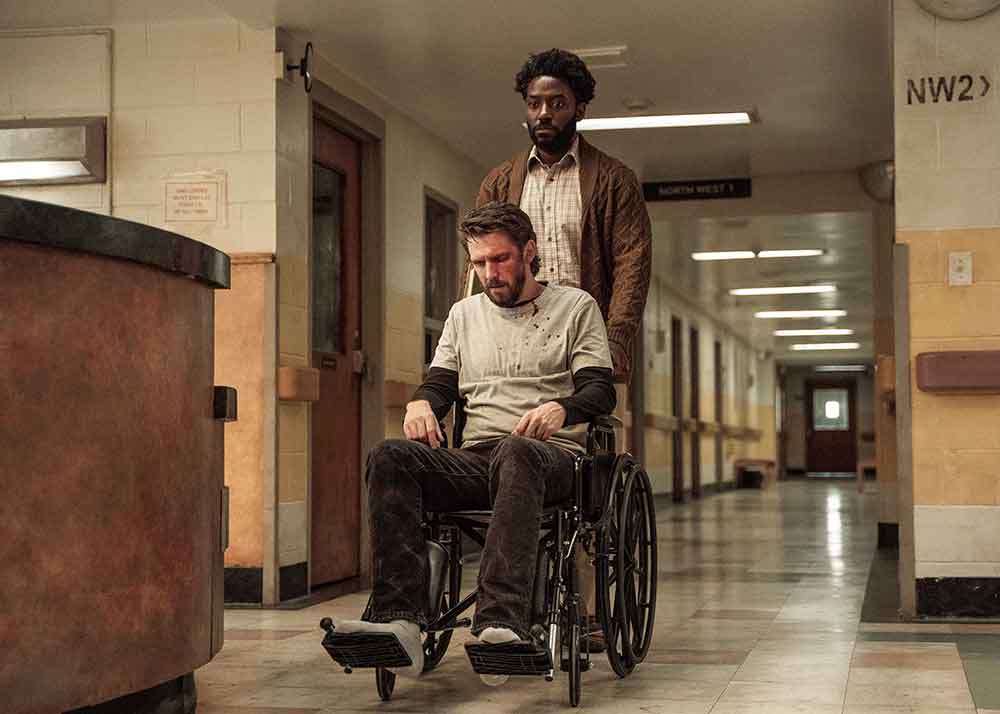
Meanwhile, a monster haunts the halls of New Hyde, which is what allowed the creators to do a thorough examination of the American healthcare system through the lens of horror. “As a lifelong horror fan, I think one of the truisms is the idea that, if you want to talk about something serious, sometimes the best way to do it is with a monster,” says LaValle. “That monster can drop people’s defences, but it never has to stop and say, ‘Alright, let’s eat broccoli.’ Instead, it hides the broccoli. And in the case of our show, we were trying to talk about some really serious subjects, but if you say, ‘Well, there’s this hospital, there’s something in it, people are dying,’ then you get to lean into the fun and the scares of that, and then sneak in all that good, thoughtful broccoli.”
Series director and executive producer Karyn Kusama agrees that the thrill of the genre is what often allows for deep conversation about societal ills. “It somehow is dismissed or considered disreputable . . . but, to me, horror is what remains culturally relevant — and I can’t necessarily say that of a lot of other genres.”
“What we’re depicting is institutional and bureaucratic violence,” she continues. “We are living it day-to-day right now [in real life]. There are examples of playbooks of cruelty, and malicious intent, that has a corollary to the kind of institution that New Hyde is — where, as much as everyone can convince themselves that they are genuinely trying to help people in desperate circumstances, they are, in fact, creating more problems.”

Although it may have seemed like The Terror had met its end as a franchise, Kusama believes Devil in Silver works well under this particular brand umbrella. “Part of The Terror has come to be about psychological imprisonment, being confined to unforgiving spaces,” she says. “In some respects, yes, this could have been a standalone limited series, but what I think is so great about it as part of the Terror title is that it actually is a modern updating of this form [deployed in the other two seasons in a historical context], which I think really depends on claustrophobic spaces being challenged by some question around a supernatural power or entity. In today’s times, what better place to start than an American psychiatric hospital?”
For LaValle, who is no stranger at looking into the failures of American institutions and systems, Devil in Silver is not just an investigation of systemic failure, but also a piece about individual responsibility. Although Pepper is placed inside this facility for the wrong reasons, he is very much a man in need of introspection. “Right at the outset of the first episode, as he sees it, he’s standing up for his girlfriend and her daughter. But that kind of bluster . . . he’s desperate for that to be how you see him,” the creator muses. “On some level, consciously or subconsciously, he knows that underneath that, in his past, he failed that test when it mattered most. So, what does it matter if you pass later tests?”
To Kusama, the character material was heightened by Stevens, a veteran of the horror world, taking on this role. “He doesn’t judge the horror genre,” she says. “I think he really believes in its power to tell a more prescient or more powerful story because of its genre.” Stevens is also just an eccentric character in real life, despite the initial, classy impression fans may have gleaned from his career-launching stint on Downton Abbey. “He is such a delightful weirdo,” laughs Kusama. “Yes, he’s a proper gentleman in that he showed up to work prepared, kind, patient, thoughtful — but then, in every other respect, he is just a wild and woolly artist, you know? It was a joy to work with him.”
Stevens himself, still best known for Downton despite turns in darker, quirkier projects like The Guest, Legion and Cuckoo, admits he is a true fan of the supernatural. “I really enjoy the genre because it invites so much playfulness and a certain kind of filmmaker that I really enjoy working with, who is determined to create something that is immediately engaging, visually stunning and often inviting something that we’ve never seen before.”
That being said, the actor admits that between Legion, Cuckoo and now The Terror, he’s spent a lot of time locked up in fictional psychiatric hospitals. “Institutions are horrific by their very nature, and I think they are great playgrounds for storytelling. So, it’s almost certainly not the last time that I will do a story in an institution,” he says. “I don’t want every project I do to look like the other one, but inevitably over time there’s going to be parallels emerging and institutions — like New Hyde in this show — are great settings for horrific tales.”
The Terror: Devil in Silver, streaming on AMC+ & Shudder