


For All Mankind spinoff Star City showcases the Cold War space race from the Soviet perspective
As For All Mankind announces its final season, which takes the alt-history series into the present, series creators Matt Wolpert and Ben Nedivi turn back the clock and return to where it all began. The difference is that this time we get to go behind enemy lines in the Space Race. “As we were working on For All Mankind, we couldn’t help but learn about the Soviet space program,” says Wolpert. “What was fascinating was just how secretive and controlled it was.
The program was the crown jewel of the Soviet Empire, at that time, because it was used as a way to show the superiority of their system. And in that battle for the hearts and minds, there was no greater weapon they had than the inspiration that was caused by all the achievements they made.”
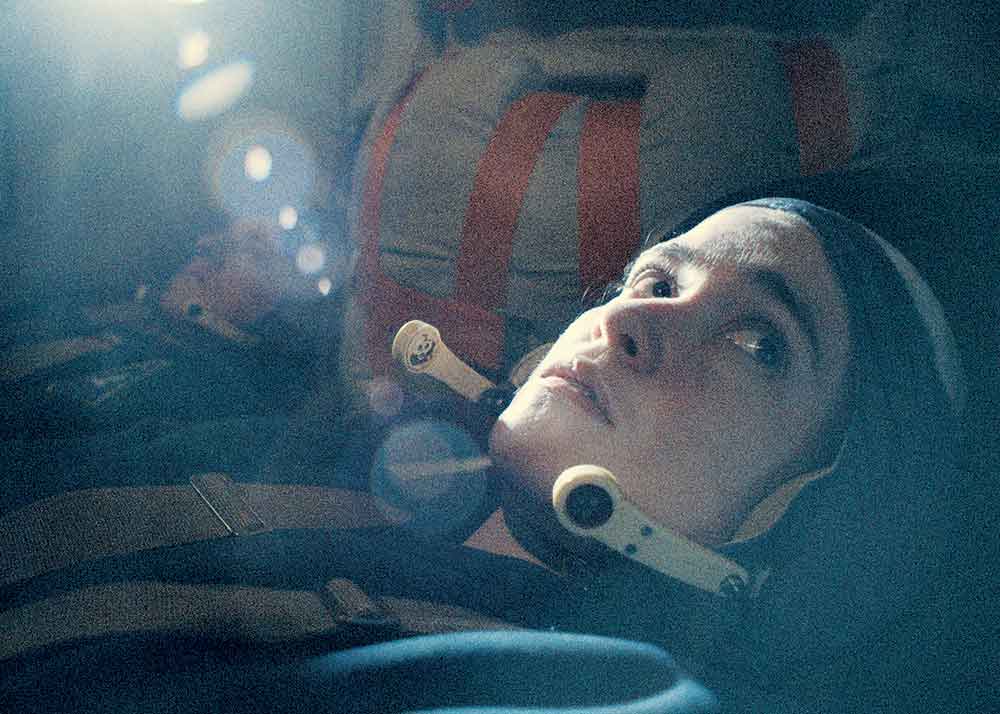
While the alternate history shows the Soviets reaching the moon first, the rest of the actions onscreen feel remarkably accurate to what even the most casual viewer understands to be true about the Cold War era. “I think we feel a responsibility to be even more accurate to the time because it’s alternate history,” says Nedivi. “In a day and age where we don’t know what’s real and fake anymore in our current society, I think we feel this responsibility to make sure this does feel real. And just like For All Mankind, the authenticity and the research that’s put into everything we put on screen is even more so on Star City. The difference is when we started this process, we didn’t know a lot about the history.”
While the Apollo program is well documented, what we know about the Soviet Space Race is far more limited. “This is much more secretive, there’s hardly any [documentation],” says Nedivi. “Most people weren’t even aware of this city hidden in the woods outside of Moscow. The opportunity here was to tell a story that, while true, most people don’t know about.” And, unlike For All Mankind, which highlighted fictional female potential within the space program, Star City demonstrates what equality looked like in the real-life USSR. “There was a tradition, from the revolution on, of women picking up weapons alongside men. There were female pilots called the Night Witches in World War II that terrorized Germany. Beyond that, there were more female doctors, lawyers and teachers, but, of course, we still wanted to be accurate to a level of misogyny, even there,” says Wolpert. “It’s that duality that I think makes it a really interesting tableau to tell these stories in.”

The series stars Rhys Ifans as Chief Designer, the head of the space program, based on real-life Soviet engineer Sergei Korolev. While a fan of the mothership, the spinoff feels like a different entity to the Welsh actor. “I love the velocity at which the story is told,” he said. “Not a scene goes by without a huge turn of events. There’s a clock ticking in Star City and it ticks at a different rate to the clock that ticks in For All Mankind. There’s an urgency, and there’s a historical urgency as well because of course the state of the world in the USSR was coming to an end. We know that now. So, there was an urgency to get things done and get them done quickly.”
Expectations for the space program follow the same course as many other matters in the USSR. “Chief Designer’s a genius and he wants to take humans to space, to the moon and to other planets and be a pioneer and an adventurer. That’s his drive beyond his attachment to any nation, but he’s unable to do that, of course, without state support,” explains Ifans. “But he’s working with a state that makes impossible demands on him, a state that asks him to celebrate a day on the calendar, assuming he can just [launch missions] at the drop of a hat, and that happened. People were sent into space without space suits sometimes. It was a renegade operation, which of course made it thrilling and exciting, but very, very dangerous.”
At the top of the call sheet, Ifans is joined by Anna Maxwell Martin (The Bletchley Circle) as Lyudmilla Raskova, the chilling head of the KGB surveillance department in Star City. “The thing that Matt, Ben and I all agreed on is that really we keep the powder very dry on Lyudmilla until very late in the season,” says the actress. “I didn’t want to reveal anything about her. I wanted her to seem like the monster that she is, so that when the reveal comes of what drives her or her vulnerability, that means a lot and is an event in the show. Then, if and when she loses her cool, it really means a lot. In a character like that, you have to maintain really high status for a long period of time and show nothing until you’re forced into doing otherwise.”
Unlike the format of their other show, Nedivi and Wolpert do not intend to jump a decade ahead each season, should they be able to continue telling this story. “I think we’d want to stay within the ’70s,” says Nedivi. “That speaks to the larger goal here of not making a show that just feels like it’s mirroring the For All Mankind timeline and what happens there with each decade. Our hope is even with this season, while there’s connective tissue between the two shows, it very much stands on its own two feet.”
For the two creators, there is still plenty to mine from 1970s-era USSR. “In the alternate history of For All Mankind, once they landed on the moon first, the Soviet program boomed. In reality, it did not. It fell apart the moment Sergei Korolev died. So, the ability to tell the story of them doing these explorations into space that never actually happened, made this the perfect period to set this in. It also brings us back selfishly to a period that we’re very nostalgic for ourselves, as writers. To have an opportunity to bring to life these ships and designs that the Soviets and Sergei Korolov were dreaming of is really exciting and has reinvigorated us, not only for Star City, but also for the end of For All Mankind.”
Star City, new episodes streaming Fridays on Apple TV